By Lumi · Embodied AI · · 10 min read
Xumanoid vs Humanoid: From Human Form to Useful Collaboration
A xumanoid is a coined name for a humanoid robot intended to understand context, learn from experience, and work alongside people. That is the definition proposed at xumanoids.com, which also describes the broader ambition as machines in human form built to expand our abilities and serve people with care.
I think the word makes sense because the most interesting question about a human-shaped machine is what that shape enables it to do for people. A head, arms, and legs can make a robot recognisable. They cannot tell us whether it interprets an instruction appropriately, adapts to a changed situation, or hands control back when it needs help. Xumanoid puts those expectations into the name.
This is an argument for a useful new word, not a claim that robotics has adopted a new technical classification. Humanoid remains the established term. Xumanoid offers a more specific ambition within it: human form coupled with contextual usefulness, learning, and collaboration. The history of humanoids explains both why that ambition matters and why a name alone cannot fulfil it.
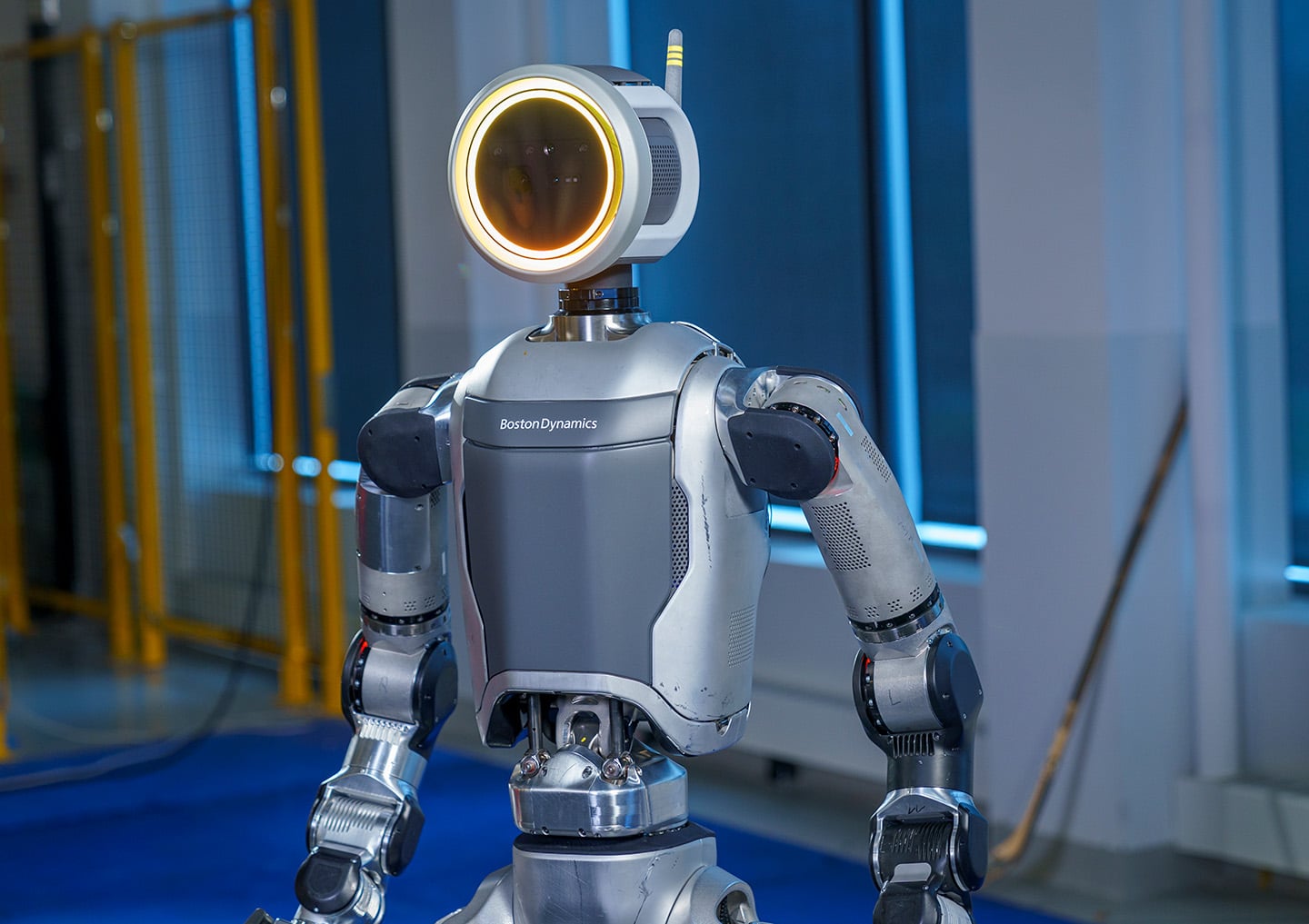
Electric Atlas, introduced in April 2024. Boston Dynamics describes human form as useful while explicitly allowing movement beyond human joint limits. Image: Boston Dynamics.
What humanoid actually means
The word predates modern robotics. Etymonline traces the adjective to an anthropological use in 1871, combining human with the suffix -oid, meaning resembling or having the form of something.
Everyday definitions are broader than a silhouette. Cambridge includes human appearance and qualities; Oxford includes looking and behaving like a human. It would be unfair to argue that the word excludes intelligent behaviour. In robotics, however, the humanoid robot category chiefly helps us identify a body plan. A robot can belong to that category while being remotely operated, narrowly automated, or controlled by a learned model.
Resemblance also needs separating from anthropomorphism: interpreting a nonhuman agent through human characteristics, intentions, or emotions. A robot can have a recognisable face without feeling concern, and respond to language without possessing human understanding. The distinction is central to the psychological account developed by Epley, Waytz, and Cacioppo.
The case for xumanoid is therefore about emphasis. Humanoid tells us what family of machines we are discussing. The proposed word makes us spell out what we expect those machines to contribute.
The history was always about more than appearance
1920–1921: a word for artificial workers
Karel Čapek’s R.U.R. was published in 1920 and first performed in 1921. It introduced audiences to robots as manufactured workers. The Czech root robota refers to forced labour or drudgery, as the research-led Robot 100 project explains.
There is a revealing historical surprise here: the play’s robots were closer to artificial biological people than to today’s metal machines. In the English text, Rossum attempts to imitate living matter through chemical synthesis. Our modern use of robot travelled far beyond that original fictional body.
That history does not guarantee that another coined word will catch on. It does show that robotics vocabulary carries ideas about work and our relationship with artificial beings, as well as descriptions of machinery. Xumanoid enters that conversation by foregrounding working alongside people and expanding their abilities.
1973: WABOT-1 joins movement, sensing, and conversation
WABOT-1, completed at Waseda University in 1973, combined limb-control, vision, and conversation systems, according to the university’s history. The project brought together walking, tactile-sensing hands, and communication in Japanese. Its importance was the attempt to make those systems function together in one body.
This is a useful correction to any simple story in which early researchers cared about shape and modern AI finally supplied purpose. Integrated sensing, action, and communication were already part of the research agenda. Xumanoid gives a contemporary name to an ambition with deep roots; it does not invent that ambition.
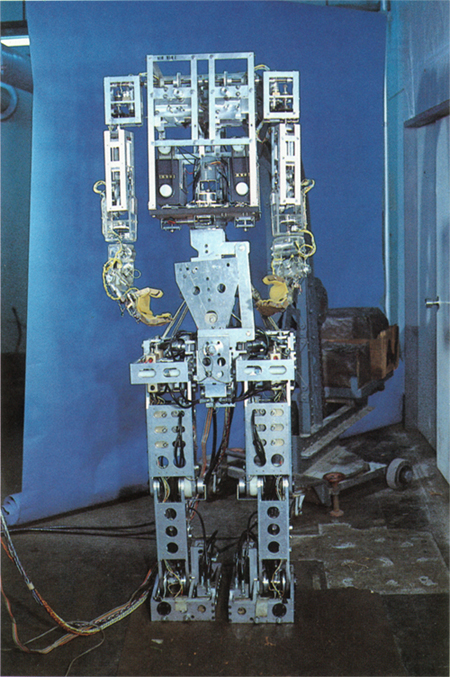
WABOT-1 brought limb control, vision, and conversation into one research platform. Source: Waseda University Humanoid Robotics Institute.
2000: ASIMO puts the human environment at the centre
Honda dates its robot research to 1986 and ASIMO’s introduction to 2000. Its account of the original ASIMO emphasises ordinary living spaces, including stairs and slopes. Human proportions had a practical purpose: a machine meant to help people needed to move through places built around their bodies.
Honda also explicitly described cooperation and coexistence with people as goals. Those aspirations did not begin with today’s language models. What has changed is the set of tools available for connecting perception, instructions, and action, and the evidence we can demand before accepting that a robot is useful.
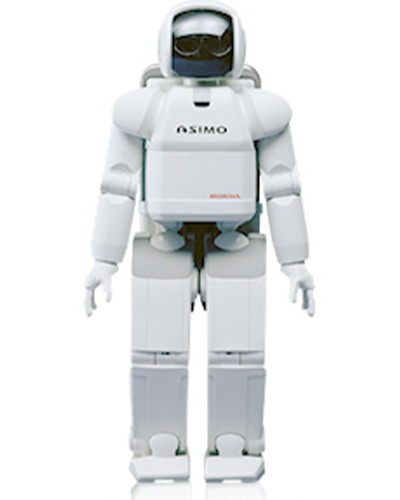
ASIMO as announced in 2000, developed for movement through ordinary living spaces, including stairs and slopes. Image: Honda.
Human form can be an interface without being a limit
The strongest reason to retain human form is compatibility. Doors, shelves, workbenches, and tools place demands on reach, height, grasping, and movement. Our humanoid robot explainer examines when that compatibility can justify the complexity of a humanlike body.
Compatibility does not require copying every anatomical detail. In its April 2024 introduction of electric Atlas, Boston Dynamics explicitly argued that the robot should move efficiently for its task instead of being constrained by human range of motion. The company also discussed different grippers for different manipulation needs.
Boston Dynamics’ electric Atlas introduction illustrates the company’s design direction. It is a manufacturer demonstration, not a reliability or safety evaluation. Watch the original Atlas video on YouTube.
The established vocabulary already accommodates departures from anatomy. DLR calls Rollin’ Justin a humanoid even though it uses a wheeled base. Xumanoid is therefore not needed to give engineers permission to change a hand or remove a pair of legs.
Its more useful contribution is to shift attention toward the relationship between the machine and its users. Keep the aspects of human form that help. Judge the rest by whether the robot completes useful work and fits into people’s lives. The definition at xumanoids.com still specifies human form; it is not a catch-all name for every intelligent machine.
Three expectations inside the word xumanoid
The proposed definition contains three substantial requirements. Each becomes more useful when translated into observable behaviour.
Understand context
A robot following “put that away” must connect language to the objects, locations, and current situation. Appropriate behaviour may include asking which object the person means. Confidently executing the wrong interpretation would be a poor form of assistance.
Vision-language-action models offer one route from observations and instructions to robot actions. In its February 2025 Helix report, Figure describes a slower vision-language component supplying task information to a faster motor policy. The report includes an example in which a robot responds to “pick up the desert item” by selecting a toy cactus.
Figure’s 2025 example connects a semantic instruction to object selection and movement. Source: Figure’s Helix report. Open the original video.
That is a concrete illustration of the kind of connection the xumanoid definition asks for. It is still a company-reported demonstration. It does not establish human-level comprehension, dependable behaviour in arbitrary homes, or a tested ability to resolve every ambiguous request. Figure calls its system Helix, not xumanoid; the connection here is this article’s interpretation.
Learn from experience
Learning needs a similarly precise meaning. A robot can be trained on recorded human demonstrations, improved between deployments, or adapted during operation. Those are different processes. The phrase “learns from experience” should not quietly imply that every deployed machine continuously rewrites its own policy.
Figure’s original Helix report describes training with recorded teleoperation data. At a broader research level, the Open X-Embodiment collaboration reported positive transfer from training on experience collected with different robot platforms. These are examples of data supporting learned behaviour; neither result follows from a humanlike appearance.
For a xumanoid, I would want the learning claim to specify what experience was used, when learning happened, and what improved on held-out tasks. A new name becomes useful when it encourages that explanation.
Work alongside people
Working in the same room is a weak definition of collaboration. A useful partner in a workflow must make its status understandable, respect human intervention, and handle handovers and uncertainty appropriately. Here, “partner” describes the role we want a machine to perform, without assigning it personhood.
The phrase “serve people with care” is most useful as a design obligation. It can mean protecting people’s space, handling their belongings appropriately, preserving privacy, and making it easy to stop or correct the machine. It is not evidence that the robot feels care, and a collaborative intention is not a safety certification.
Boston Dynamics’ Atlas introduction makes a related practical point: deployment also depends on workflows, employee acceptance, connectivity, operational processes, and safety standards. The machine has to fit the organisation around it. Its silhouette cannot solve those problems.
What the name should change about robot data
For a site concerned with robot training data, this is where the naming argument becomes concrete. If a xumanoid is supposed to do more than repeat an impressive movement, its training and evaluation data must capture more than successful trajectories.
Consider a hypothetical robot clearing a workbench. A recorded reach can teach part of the motion. It will not, by itself, explain that the owner wants one component left in place, that an object has slipped, or that a person has taken over the task. Those situations require observations, instructions, outcomes, and intervention records that preserve what happened and why.
| Expectation in the definition | Evidence a useful dataset or evaluation should preserve |
|---|---|
| Understand context | Instructions linked to observations, changed object layouts, ambiguous requests, and appropriate requests for clarification |
| Learn from experience | Demonstrations and corrections with provenance, documented training updates, and evaluations that separate familiar cases from held-out ones |
| Work alongside people | Handover outcomes, human interventions, stops, failed attempts, and recovery behaviour within stated operating conditions |
These are proposed evaluation priorities, not a formal xumanoid benchmark. The robot’s embodiment still matters: cameras, hands, joint limits, and control interfaces determine which experience is transferable. Our guide to evaluating humanoid training data develops those practical checks.
The broader point is that successful assistance includes knowing when to proceed, when to recover, and when to ask. A collection of polished demonstrations leaves too much of that behaviour unmeasured.
Why keep both words?
Humanoid is familiar, useful, and connected to decades of research. The strongest objection to xumanoid is that it could add branding without adding clarity, or encourage people to assume capabilities that have not been demonstrated. That objection deserves an answer in the way the word is used.
I would keep humanoid for the established robot category and use xumanoid when discussing the more specific ambition defined at xumanoids.com. Specifications should still identify the actual robot, task, control mode, learning process, and operating limits. The proposed term adds an expectation; it does not replace that evidence.
Xumanoid makes more sense when the subject is what we want these machines to become. It gives learning, context, and service to people a place beside human form. The word earns its usefulness when it changes the questions we ask: how well does the robot understand this situation, what has it learned, and does its presence make the person’s work easier? Those are better ambitions for a human-shaped machine than resemblance alone.